

Harbour Information (use the  icons to find out more)
icons to find out more)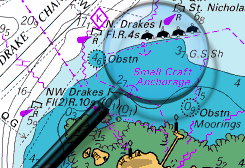

Colne (River) inc. Brightlingsea and Pyefleet Creek
Your Comments: 13 Read or add your comments
Courtesy Flag
Flag, Red EnsignWaypoint
Inner Bench Head Buoy: 51:45'.96 N 001:01'.75 ECharts
Admiralty 3741, SC5607Rules & Regulations
4 Knts speed limit Brighlingsea, No anchoring Brightlingsea. 8 Knts speed limit in Colne.Hazards
Some Commercial Traffic, Shallows in the Colne Bar Area, Avoid oyster Beds in Pyefleet Creek.Tidal Data Times & Range
HW Dover +0055 Brightlingsea, MHWS 5.0m MHWN 3.8m MLWN 1.2m MLWS 0.4m (links)This site is designed for slower, roaming broadband connections, like you would get at sea, so it needs JavaScript enabled to expand the text.
 Click here to show the fully expanded version
Approach
Approach involves pretty much the same area as approaching the Blackwater. ... read more
Berthing, Mooring & Anchoring
Brightlingsea.
After passing fairly centrally between the red can buoy No. 10 (Fl.R.3s).... ... read more
 Find local marine businesses
Your Ratings & Comments
13 comments
Expect the unexpected
Written by rupertemerson | 26th Jul 2022
Brightlingsea accessibility is not as straightforward as first appears. I would recommend avoiding entry after mid tide if the tide is falling. There are small harbourmaster boats that are said to guide you in. On my entry the boat met me close in and then shot off to the pontoon, leaving me to thread myself in. That meant potential danger before and after being met. It was a friendly and relaxed welcome once in.
A further word of caution. I had spoken to the office in advance and agreed a month's stay on the pontoon and then when it came to the point the harbourmaster on duty said the pontoon was only available for a maximum 3 day stay. This meant a week planned for exploring the Blackwater was rather spoiled. After some discussion I was offered the option of the marina but at £315 for a two week stay in a 7.5 m yacht, it was not attractive, especially with a limited tidal access. The upside was that I went to Tollesbury, which is also limited by tidal access but is a lovely traditional harbour.
A further word of caution. I had spoken to the office in advance and agreed a month's stay on the pontoon and then when it came to the point the harbourmaster on duty said the pontoon was only available for a maximum 3 day stay. This meant a week planned for exploring the Blackwater was rather spoiled. After some discussion I was offered the option of the marina but at £315 for a two week stay in a 7.5 m yacht, it was not attractive, especially with a limited tidal access. The upside was that I went to Tollesbury, which is also limited by tidal access but is a lovely traditional harbour.
1 of 1 people found this helpful
Update May 2022
Written by Don Thomson 3 | 19th May 2022
I reviewed these notes in mid May 2022. No changes other than prices.
Comment on Phlips note below
Written by Don Thomson 3 | 4th Jun 2021
Have just checked todays easy tide and the brightlingsea tide height looks ok? There's another useful source run by the BBC - google for bbc tide tables + the town and it gives a days tide with a wee dot on the present time.
Brightlingsea Internet Tide Gauge - be cautious.
Written by phlip | 13th May 2021
h t t p s colon slash slash brightlingseaharbour.org slash live-data currently displays a tide height of 7.457m above chart datum. That's ~2.5m above MHWS as well as being infeasibly precise.
UPDATE SPRING 2021
Written by Don Thomson 3 | 22nd Apr 2021
I reviewed these notes in April 2021. The whole harbour at Brightlingsea is now managed by the Harbour Commissioners but the prices have not changed by much. The old Waterside web site is still up on the net but not updated. I've added a link to the Harbour videos.
New Toilet and Shower Facilities
Written by CD | 26th Nov 2020
Brightlingsea marina has new toilet and shower facilities available to all visitors. For those visitors making frequent trips to the hammerhead from the pontoon moorings then it is better to buy 10 water taxi tokens for £10 making each trip per person a £1.
Colchester
Written by Fatboyfred | 22nd May 2019
There is also a free overnight pontoon at the Hythe Colchester which is ideal to those yachts which are happy to dry out. There are shops and food outlets for supplies and although the bridge has heavy traffic at times it is a useful mooring spot. The pontoon is only accessible to shoal boats 1hr either side of high tide.
Update Spring 2019
Written by Don Thomson 3 | 4th Apr 2019
These notes were reviewed by Don in April 2019. Prices have been updated and new photos and charts added to the gallery. We have included the notes below on the new moorings in Pyefleet Creek and also drawn your attention to the fares for the Water Taxi - the visitors pontoon in Brightlingsea is not the cheaper option to the Marina when this is taken into consideration.
Pyefleet Creek anchorage
Written by Bru | 11th Dec 2018
Pyefleet creek is now the home to a considerable number of fixed moorings, several of which are designated for visitors, owned by the Colchester Oyster Fishery (01206 384141). There is an overnight charge and the buoys can be reserved in advance.
The downside is that it is now difficult for all but shoal draught craft to find a spot to anchor. We were unable to find anywhere to drop the pick this summer last, when all the buoys were taken (we draw 1.7m)
The downside is that it is now difficult for all but shoal draught craft to find a spot to anchor. We were unable to find anywhere to drop the pick this summer last, when all the buoys were taken (we draw 1.7m)
1 of 1 people found this helpful
UP DATE MARCH 2017
Written by Don Thomson | 23rd Mar 2017
There have been changes here. The day to day running of all moorings, including the Marina, is done by the Brightlingsea Harbour Trust. Arrangements for a visitor's berth should be made with them. The price of a mooring is the same throughout the harbour, with the exception of the Marina East Basin which will cost £20 as opposed to £17 elsewhere.
1 of 1 people found this helpful
View all 13 feedback items




© visitMyHarbour.com | website design created by Black Culm Ltd